248
248
In 2025, as global e-commerce dynamics continue to shift, Chinese cross-border sellers are facing new uncertainties. The recent commission increase on Wildberries, Russia’s largest online marketplace, is a clear warning. Popular categories such as apparel and footwear have seen commission rates rise by five percentage points in just six months. For active sellers, this change doesn’t just raise operational costs—it narrows already thin profit margins and amplifies market instability.
While the platform claims to offer lower commissions for small businesses, in reality, only a handful of sellers benefit. The majority are forced to recalculate SKU profitability, adjust advertising strategies, and optimize logistics to survive. As platform policies shift more frequently and traffic becomes increasingly monopolized, dependence on third-party platforms exposes sellers to greater risks than ever before.
The Harsh Reality of Platform Dependence
The challenges faced by marketplace sellers today can be summarized in three dimensions:
Escalating Costs and Declining Profits – The continuous increase in commissions, ad spend, and logistics fees directly eats into sellers’ margins. Raising prices risks losing competitiveness, while maintaining lower prices means operating with razor-thin profits.
Traffic Monopoly and Rising Dependence – Platforms like Wildberries, Amazon, and AliExpress control the majority of user traffic. Their algorithms decide who gets visibility, forcing sellers to pour more money into paid promotions just to maintain market presence.
Unstable Business Environment – Sudden changes in platform rules—whether in advertising policy, commission structures, or logistics systems—make long-term business planning nearly impossible.
With marketplace growth stagnating and operational costs soaring, the question is no longer whether sellers should build their own independent websites, but how soon they can do it.
Taking Control: Building Independent Traffic and Sustainable Growth
Owning a direct-to-consumer (DTC) website is no longer a luxury—it’s a necessity. A self-owned website not only grants sellers autonomy over branding, data, and pricing, but also establishes a sustainable growth engine that is immune to sudden platform changes.
However, many sellers still find themselves trapped in the “easy to build, hard to operate” dilemma:
The Traffic Black Hole – Unlike marketplaces, independent sites don’t come with built-in audiences. Sellers must drive their own traffic, but paid ads on major platforms like Google, Meta, or TikTok have become increasingly expensive, pushing up the cost per acquisition (CPA).
Payment and Compliance Barriers – For sensitive product categories such as adult products, vape accessories, and health supplements, payment gateways often impose restrictions or outright bans, leading to failed transactions and frozen accounts.
Fragmented Operation Chain – Many businesses rely on separate platforms for web hosting, marketing, logistics, and payment, resulting in data silos and inefficiency. Without centralized analytics, decision-making becomes slow and reactive.
High Labor Dependence – Successful operation requires professional teams skilled in SEO optimization, ad management, and content marketing. For small and mid-sized sellers, trial-and-error costs can be prohibitive, preventing scalable growth.
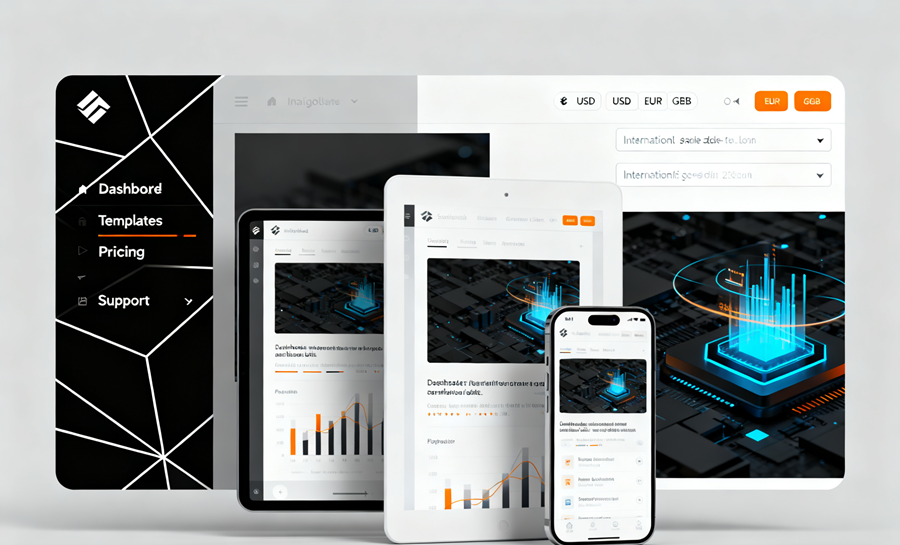
The DTUY Solution: Empowering Chinese Brands to Go Global
To overcome these barriers, Chinese businesses need a comprehensive, data-driven, and scalable independent site ecosystem. This is where DTUY plays a pivotal role.
As a professional outbound website builder and marketing partner, DTUY not only provides sellers with tailored website development and integrated marketing solutions, but also ensures seamless SEO optimization and social media marketing support. By combining technology, data, and creative strategy, DTUY helps exporters:
Build high-performance, conversion-focused websites with global reach.
Implement localized SEO to rank organically on Google and attract long-term, low-cost traffic.
Leverage multi-channel marketing—across Facebook, Instagram, TikTok, and YouTube—to expand brand visibility.
Integrate logistics, payment, and CRM systems for a fully connected operation chain.
Reduce dependence on third-party platforms and regain control over pricing, branding, and customer relationships.
From Platform Dependence to Brand Ownership
In the era of shrinking platform dividends, owning your traffic and data is owning your future. Building an independent site is not simply about selling products—it’s about establishing a sustainable business model driven by brand identity and customer loyalty.
For Chinese cross-border sellers navigating volatile markets, DTUY provides the technical foundation and marketing expertise needed to make that transition. The path forward is clear: those who continue to rely solely on platforms will remain at the mercy of changing policies, while those who own their websites will secure the autonomy and growth momentum essential for long-term success.
In 2025 and beyond, independence isn’t just an option—it’s the only way out.